





Adagio Teas' venture into physical retail   learn more >
Subscribe
Email:   >
Recent
Archive
Stores
Recommendation

Selling Fair Trade: Pros and cons
Charles Cain - Jan 21st 2010

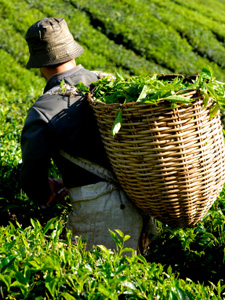
Picking Tea

In recent years we've seen an explosion of claims and certifications in the tea industry. It is important for those in the industry, and those who care about the industry, to understand and communicate the pros and cons of any particular certification or quality control approach. A few days ago I shared my thoughts on the pros and cons of marketing Organic teas. Today I'm turning my attention to Fair Trade.

On a personal level, let me say that I believe, without reservation, in the concepts and theories behind movements like Organic and Fair Trade. At the same time, I believe that each of these certifications (and a host of other competing programs) are not yet perfect. I was encouraged by the debate on TeaChat following my Organic article. Too often these issues are treated more as religion than policy, and any attempt to view them with a critical eye is seen as heresy.

I tend to be a realist, and am a bit cynical about the long term effectiveness of many non-profit organizations. I pursued a degree in Economics, not because I don't care about people, but because I believe that the best way to help the poor is not to give them someone else's fish but to create the circumstances in which they can consistently catch (or earn) their own. Fair Trade is an interesting hybrid because it focuses effort both on artificially increasing the wages of the workers in the short run, and also on investing in local infrastructure and community development to create long-term, environmentally and economically sustainable circumstances.

Let's pause for a moment to better define the Fair Trade movement and Fair Trade Certification process as it relates to tea. Fair Trade is based on the assumption that the market price paid to tea growers/laborers is not "fair" and does not promote sustainable living environments. In this way, Fair Trade is to the local economy and the worker what Organic is to the environment and the plants. (To be fair, some Fair Trade organizations also focus attention on environmental sustainability but their mission is primarily social and economic.)

A Fair Trade premium of between $0.50 and $1.50 per Kilogram (2.2 lbs) of tea is charged by the grower. In addition, the growers pay a certification fee in order to gain Fair Trade status. These premiums and fees go directly into the pockets of the laborers, towards developing programs at the local level, and towards funding the certification process, the Fair Trade bureaucracy, and marketing the Fair Trade brand internationally. For comparison purposes, the "Fair Trade" premium on coffee is $0.05 per pound.

Producers must apply for certification through one of several Fair Trade Organizations (FLO, IFAT, NEWS, EFTA, etc.) which require adherence to the following criteria:
1. Fair Labor Conditions: wages, working conditions and living conditions
2. Direct Trade: no middlemen adding unnecessary costs
3. Community Development: investment in services and/or infrastructure to aid the community
4. Environmental Sustainability: agricultural methods that are "healthy"
5. Transparency: free association of workers and farmers and democratic decision-making

Because many tea gardens are small, family affairs without the means to participate in community investment or adhere to extensive bureaucratic documentation and auditing rules, the vast majority of specialty tea producers are not "Fair Trade" certified. In truth, these programs and processes are best suited for the giant tea estates that produce the 97% of global tea supply that is commodity grade and harvested and processed by machine. In some countries, like Japan, no Fair Trade teas can be found because the tea workers are already paid far above the poverty level. This would be akin to demanding a Fair Trade wine from France.

"Fair Trade" sourcing options have expanded in recent years, but they are still are very limited in the world of premium loose tea. As a result, Adagio prefers to get involved directly at the source. While we support the IDEAS behind Fair Trade, we believe that, currently, the best way for us to raise the living and working standards of the growers is to introduce Americans to premium loose leaf teas. Premium teas fetch premium prices AND require significant additional human involvement. The result is higher wages, more employment, and better tea for all of us! In addition, we buy all of our teas directly and choose our producing partners based, in part, on their business practices. Finally, we contribute directly to the well-being of the farmers through programs like our Roots Campaign. As Adagio grows, our purchases result in meaningful changes in the lives of our producing partners and their employees.

I'll close with a brief personal story. A couple years ago I had a conversation at the World Tea Expo with the owner of a very large and very prominent tea estate that has been a long time proponent of the Fair Trade movement. This gentlemen is well known, very prominent in the tea industry, and VERY wealthy. He insisted that Americans unwilling to buy Fair Trade teas and pay the small Fair Trade premiums were cold and heartless. He said, without a hint of irony, that the laborers on his estate NEEDED that premium to put bread on the table and provide for their families. Given that he's in a region that is internationally renowned for fine tea, and that the tea business has been a perfectly profitable, self sustaining, and vibrant engine of economic growth for many generations, I couldn't help but wonder if Fair Trade wasn't simply a marketing advantage for this man, and a way for him to push the burden of paying his employees a living wage onto the consciences of the American consumer.

Fair Trade is a noble and valuable movement. It has been effective in driving change in a number of industries including mass market coffee and tea. But I can't help but question if Fair Trade certification is the best approach to today's premium loose leaf tea market. If the consumer were to insist tomorrow on buying only Organic and Fair Trade teas, the immediate impact would be the destruction of the small tea farmer and the shift in production to large corporate conglomerates with much larger volumes and the resources to handle the administrative auditing and documentation burdens.

Adagio Teas
Twitter:


Voice your opinion about this article on TeaChat!
Jan 26th '10 9:59
I've written an article on the pros and cons of Fair Trade in premium tea (http://www.tearetailer.com/article_32.html). In short, I believe in the drive for economically sustainable agricultural practices but am wary of the impact of the certification bureaucracies on small farmers, and believe the rules and regulations still leave a lot of room for improvement.

I'm curious how important Fair Trade is to you? What percentage of the tea you buy today is Fair Trade? Finally, how important is Fair Trade to you in other foods you buy?
Charles
Chicago, IL
Jan 26th '10 10:13
As far as I know, none of the tea I buy is fair trade. I don't seek it out and it's not something that is super important to me when buying tea. I think I've always assumed that most of the teas I buy come from farms where the workers/farmers are doing "fine" economically.

But when I think/hear about the subject more and more, I guess it seems like something I should care about. I just don't dig mega certification systems that you have to buy into just to carry a label (I mean... obviously there's more to it than that... but still... yeaaaah)

Great article, btw. Learned a lot from it.
bsteele
Lilburn, GA
Jan 26th '10 10:44
Another great article Charles. Great Job!
I enjoyed the story with the wealth tea farmer pushing fair trade (particularly on the Americans). Like any good system, there will always be those who corrupt it and take advantage. The big picture is important, getting the tea farmers their fair share. I truly believe this will result in happy farmers, resulting in an all around higher quality tea. I work in the service industry and it's been proven time and again that happy employees make happy customers. Seems logical that happy farmers would take more care and pride in producing their tea.
It's been my experience that when buying from a single family tea estate that the prices are generally higher than that of a larger estate. So in a way the economy is already compensating for a fair trade market as the consumers become more educated. I think in time, like most things, it will balance itself out. I fear that over-regulation could hurt the small tea producers if they are not graded fair trade status based on the selling price of their teas.
virago_ns
Halifax, Nova Scotia, Canada
Jan 26th '10 10:58
There is no question that well paid workers results in better products which results in higher prices and better paid workers. It's the economic cycle. The flip side is that Fair Trade can actually retard this cycle by propping up growers that SHOULD go out of business or be forced to sell to someone that can actually make the farm profitable by growing products that people will pay for.

Many of the estates in Darjeeling are very profitable and pay their workers very well - far above the typical agricultural worker in India. A few gardens that were unable to compete in terms of quality (and therefore unable to charge premium prices and pay premium wages) went Fair Trade as a marketing ploy. They were then able to sell inferior teas at premium prices. Now the premium Darjeeling estates have started to go Fair Trade because they feel forced to do so for marketing reasons. As a result, a percentage of the premiums will be funding a bureaucracy that wasn't needed (in these estates anyway) in the first place.

The big question, as with any non-profit, is what percentage of the funds go for administrative purposes vs. going to the worker?
Charles
Chicago, IL
Jan 26th '10 11:13
From the article: "I believe, without reservation, in the concepts and theories behind movements like Organic and Fair Trade. At the same time, I believe that each of these certifications (and a host of other competing programs) are not yet perfect."
+1 Spot on. Don't think I could have said it better myself.
Absolutely true.

I'd love to know the answer to this. Of course, it's going to depend on the company, but it'd be interesting to see.

As for me, I don't go out of my way to search out Fair Trade items; it's like any other product - if it's there, I've heard good reviews, and it's not prohibitively expensive, I'll probably get it. I believe wholeheartedly in the concept, but you're right, the system needs work.
LauraW
SC
Jan 26th '10 19:05
Currently I go 100% fair trade for chocolates and coffee. For chocolates, I don't have to think hard to decide, since most of my favorite (by taste) chocolates are fair trade anyway. I switched to fair trade chocolates and coffee a few years a go, after seeing and reading about many ugly stories in these trades. As for tea, I don't care much about fair trade because most farmers I know or know of are fairly happy. But it's always possible that there are ugly stories that I haven't heard of yet so if anyone knows some please do share.
gingkoseto
Massachusetts
Jan 26th '10 20:08
Hmmm, I think we should hijack this topic and talk FTC CHOCOLATE!!! Care to share some fave selections Gingko???

I would like to see more FTC teas out there, but I am not holding my breath too much for Chinese teas to go up dramatically. All of the FTC teas I have had so far have been Chinese.

I do not see reasons to think about FTC for Japanese teas where I am most of the time, they seem to have their act together w/o it.

As with organic certs, I am not overly confident in the system, but Rome was not built in a day.
Chip
Back in the TeaCave atop Mt. Fuji
Jan 27th '10 9:17
Ha chocolates! Most of the time I buy black chocolates of "Green and Black", "Equal Exchange" and "Divine" from Whole Food (which seems to have lowest prices in my area). I like those with 60%-75% cocoa, with some bitter or slight sour aftertaste. But once I tried some 80% cocoa no sugar and realized I could only use it in tiramisu but couldn't handle it alone :P A chocolate I think very unique is Taza. It's expensive ($6 for a small than regular block), but I guess it's not due to overpricing but because the company is in small operation with very small production line. It uses crude cocoa fluid instead of filtrated one, so the chocolate has some fiber texture in it.

Ideally I like black chocolates with nuts (especially hazelnuts), but there seem not many choices, and most nuts are just almonds. Just thought of it, I don't really "100%" buy fair trade. These days, Lindt is closing out their shopping mall stores. EVERYTHING at least 50% off. My girlfriend and I just went crazy buying a lot the other day :o
gingkoseto
Massachusetts
Jan 29th '10 0:36
Charles, thanks for this article - it has confirmed some things that I have wondered about but not been sure how to voice, given the fear of looking like a fair-trade heretic. It is so very distressing to hear about the dreadful conditions that tea workers have laboured under, but reassuring to think that opting for the full-leaf and high quality is good for them as well as for us. Down with mass-produced mediocrity! :)

Where would you recommend learning more about the pros and cons of fair trade tea - as you say it is a very emotive issue - I would like to understand both sides more fully.
Veri-Tea
Australia
Jan 29th '10 11:45

I agree with this statement. Though I am not a big coffee drinker and don't pay TOO much attention to the fair trade logo, the majority of teas I have had were or are converting to fair trade. I always like to see the tea farmers properly compensated, that way, maybe they will pride their work and it will result in happier customers and better tasting tea! Though this is just my opinion, I would hate to see farmers not get compensated properly for their work in "sweatshop" conditions. Just my opinion though :)
teacast
Meadville, Pa
Jan 29th '10 13:23
In response to the question about where to learn more about Fair Trade in Tea:

Unfortunately I must admit that I'm aware of no unbiased deep analysis of the issue. The simple truth is that this is a very emotional issue steeped in a great deal of rhetoric. I've talked to a lot of very vocal "experts" who have gathered all of their information from other vocal "experts". Very few people have studied this question on the ground and can comment authoritatively on what is happening and where Fair Trade is and is not effective.

The vast majority of what I've read about Fair Trade in the US is written with the intent to persuade and so the facts and the analysis are quite skewed. For example, what are acceptable wages and living conditions? What if a tea laborer works for $20 a week and lives with no electricity, running water or access to modern medicine? Is that good or bad? That happens to be the national average for India. Without a meaningful baseline, any data is easily misleading.

I've heard plenty of true stories of terrible working conditions in India and many other tea producing countries. But it's important to note that there are workplace horror stories every day in the news in the US too. The solution to mistreatment of employees is not necessarily certification by an international body.

Again, I LOVE the idea of Fair Trade. I love the goals. I've just learned that grand ideas often get pretty twisted before they reach the ground... especially in developing countries. Example: Are you sure that when your Fair Trade premium goes to the worker it doesn't just allow the garden owner to pay less out of their own pocket?
Charles
Chicago, IL
Mar 18th '10 11:54
I just saw this today and thought it might be of interest to those who have posted in this thread. It was made by two Danish filmakers in 2009 and is a documentary of their visits to five different tea plantations in Sri Lanka, India, Kenya and Bangladesh, some "traditional" and some "fair trade".

The Bitter Taste of Tea:

http://digital.films.com/play/LSCQKZ
Jack_teachat
Leicester, UK
Mar 30th '10 14:44
Thanks for the post Jack_tea, very worth while watching.
ChiQ Tea
Jul 26th '10 17:23
I would like to see more FTC teas out there, but I am not holding my breath too much for Chinese teas to go up dramatically. All of the FTC teas I have had so far have been Chinese.

I do not see reasons to think about FTC for Japanese teas where I am most of the time, they seem to have their act together w/o it.
Fair Trade certification is limited by country. Japan, South Korea, the US, Canada, Australia, New Zealand, and all countries in Europe are ineligible.
China has some extra complications with Fair Trade certification that I am not familiar with.

I'm surprised you got mostly Chinese FT teas; the packaged ones I see in the local FT outlet are from Sri Lanka.

Fair Trade started out working with coffee co-ops in Latin America, and while they work with tea estates due to the lack of tea co-ops, the standards imply dealing with producers of significant volume rather than individual farmers. The book "God in a Cup", about the coffee retailers pushing the bleeding edge of specialty coffee and their world, has some interesting commentary from them about Fair Trade coffee and its effects on the ultra-specialty market. From their point of view, Fair Trade encourages turning out a mid-quality product; splendid coffee is blended with indifferent coffee to produce the co-op's coffee, and there is no way to buy only the best coffee at any price.
Shihali
Jul 26th '10 22:00
TBH, I have only had a handful of FTC teas ...
Chip
Back in the TeaCave atop Mt. Fuji
Jul 26th '10 23:07

This is my fear for Specialty Tea. Well said.
Charles
Chicago, IL
Aug 12th '10 21:48
I do have a concern for free traded tea as well as sustainably grown and organically grown tea but I agree what will happen with the small tea producers who can't go through all the red tape of certification.

The one thing I don't understand about free trade tea is how is it really established? Who is to really tell if it is free traded or not?
sanamionline
NingMing, Guangxi
Aug 14th '10 11:09
There are organizations (like Trans Fair http://www.transfairusa.org/) that regulate the use of Fair Trade Certifications.
Charles
Chicago, IL
add to conversation